
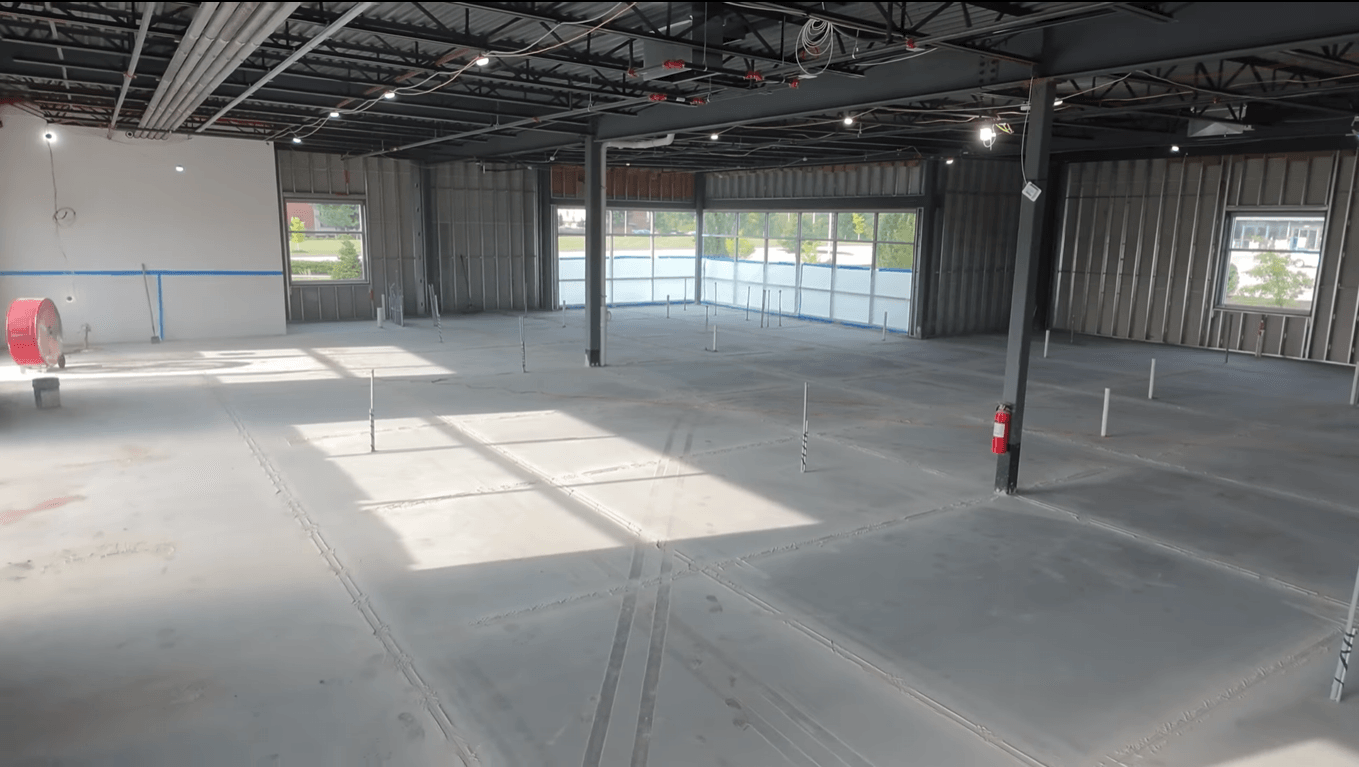
Industrial
Concrete Floors
Specializing in high FF/FL floor flatness for Milwaukee warehouses and heavy industrial manufacturing facilities.
Get a Precise,
No-Hidden-Fees Quote
- Super-flat FF/FL slab capabilities
- Laser screed & power trowel technology
- Liquid densifier surface hardening
- Loading dock & exterior apron pours
Executive Summary / Fast Facts
- FlatnessHigh FF/FL Ratings
- ResistanceChemical & Abrasion
- FinishPower-Troweled Gloss
Infrastructure Integrity
The Silent Floor Killer
Industrial Fatigue
When a warehouse floor fails, inventory is ruined, forklifts are destroyed, and safety is compromised. Trinity engineers out these failures with laser-screed precision.
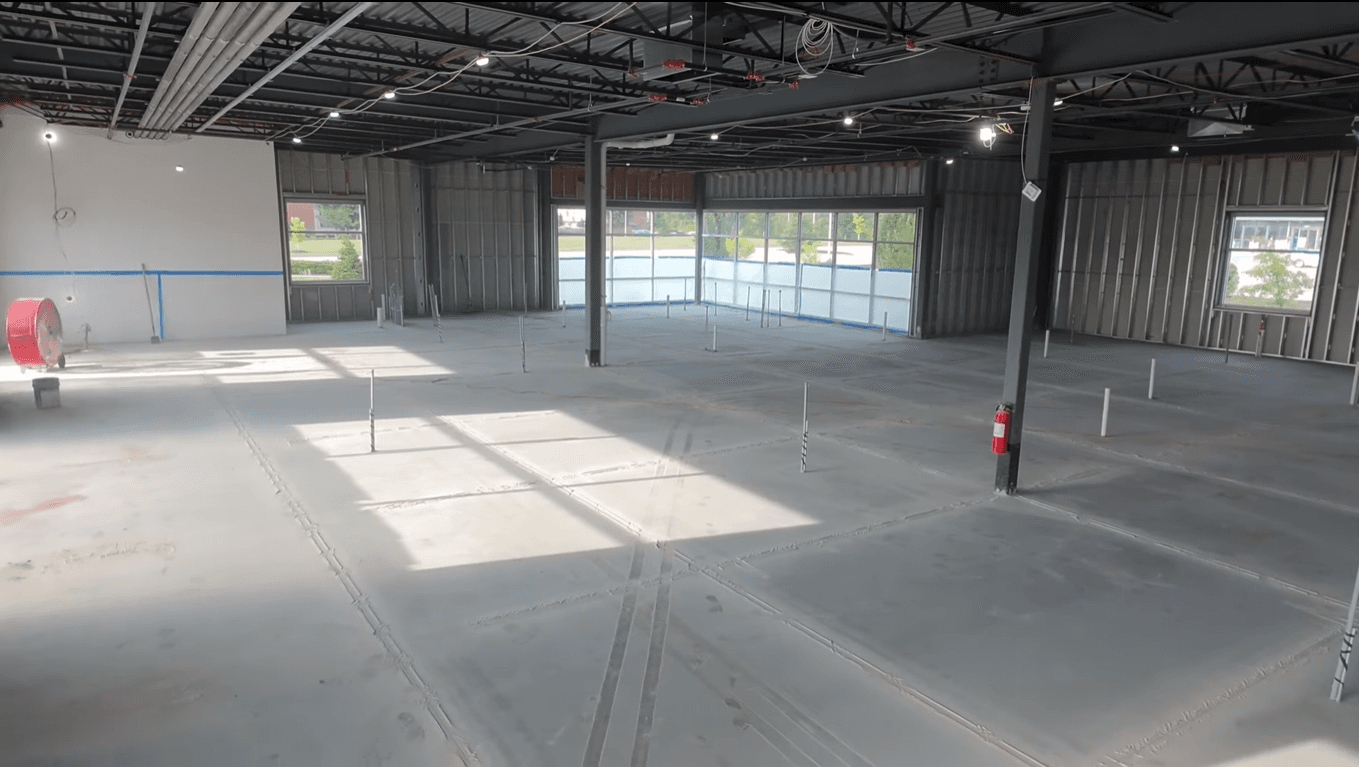
Industrial Floor Systems
Super-Flat Flooring
Manufacturing Pads
Densified Protection
Advanced Methodology
Solid Subgrade
Extreme compaction and heavy-mil vapor barriers prevent moisture and voids.
Laser Screed
Automated plow strike-off with laser precision thousands of times per second.
Ride-On Trowels
Twin-rotor finishing blades aggressively burnish the surface density.
Liquid Densifiers
Chemical reactive silicate flooding for a permanent dust-proof surface.
Why Trinity
Why Choose Trinity
Trinity is the industrial concrete contractors team that Milwaukee and Waukesha facility managers call when floor flatness tolerances and load ratings are critical to operations.
Our industrial concrete construction crews use laser screed technology to achieve FF 50-100 and FL 50-100 super-flat ratings for VNA warehouses and automated guided vehicle facilities.
With 35+ years of industrial concrete work experience, we have poured floors for manufacturing plants, food processing facilities, cold storage warehouses, and distribution centers across SE Wisconsin.
Every industrial concrete contractors project includes proper vapor barrier installation, subgrade compaction testing, and liquid densifier application for a permanent dust-proof surface.
Our industrial concrete construction methodology handles pours up to 20,000 sq ft in a single day, minimizing downtime for your facility operations.
As experienced industrial concrete work specialists, we coordinate phased pours and off-hours scheduling so your production lines keep running during floor replacement projects.
Process
Our Process
Subgrade Preparation & Vapor Barrier
The existing slab is demolished if needed, and the subgrade is excavated and compacted to 95% Modified Proctor density. A heavy-mil polyethylene vapor barrier is installed with sealed seams to prevent moisture transmission that causes floor coatings to fail and inventory damage.
Reinforcement & Laser Screed Pour
Structural rebar grids or macro-synthetic fiber reinforcement are placed per the engineering spec. Our laser screed strikes off the concrete to within fractions of an inch of target elevation, achieving the high FF/FL flatness ratings that modern racking systems and forklifts demand.
Power Troweling & Surface Hardening
Twin-rotor ride-on trowels aggressively burnish the surface to maximum density. Metallic or non-metallic shake hardeners are broadcast and troweled in for heavy-traffic applications. Liquid reactive silicate densifiers are flooded onto the surface to create a permanent, dust-proof finish.
Joint Cutting & Protection
Early-entry saws cut control joints at engineered intervals within hours of finishing to prevent random cracking. Semi-rigid polyurea joint fillers are installed to protect joint edges from the constant impact of forklift wheels and pallet jack traffic.
In Depth
Industrial Flooring Expertise
Trinity Construction provides industrial concrete contractors services for warehouse, manufacturing, and distribution facilities throughout Southeast Wisconsin. Our industrial concrete construction expertise spans 35+ years of pouring high-performance floors that withstand the punishing demands of heavy forklift traffic, chemical exposure, and 24/7 operations. As industrial concrete work specialists, we understand that a failed floor doesn't just cost money to repair. It shuts down production lines, damages inventory, and creates safety hazards for your workforce. Our industrial concrete contractors team uses laser screed technology to achieve the super-flat FF/FL tolerances that modern Very Narrow Aisle warehouses and automated guided vehicle systems require. For standard warehouse applications, we pour 5-6 inch slabs at 4,000 PSI. Heavy industrial concrete construction projects involving large forklifts, manufacturing equipment, or high-rack storage get 8-10 inch slabs at 5,000-6,000 PSI with structural rebar reinforcement. Every industrial concrete work project includes comprehensive subgrade preparation with compaction testing, heavy-mil vapor barriers, and liquid densifier surface hardening that eliminates concrete dusting, a critical requirement for food processing and pharmaceutical facilities. As the industrial concrete contractors that SE Wisconsin facility managers trust, we also specialize in phased pours that keep portions of your facility operational during floor replacement. Whether you need a new distribution center floor in Kenosha, a manufacturing pad in Milwaukee, or a cold storage facility slab in Waukesha, Trinity's industrial concrete construction team delivers floors engineered for decades of heavy industrial use.
Ready to Start?
Get a Free
Estimate
Owner Jerry Breske personally handles every project from estimate through final inspection.
Engineering
Technical Standards
| Specification | Standard Warehouse | Super-Flat / Heavy-Duty |
|---|---|---|
| Slab Thickness | 5–6 inches | 8–10 inches |
| Concrete Strength | 4,000 PSI | 5,000–6,000 PSI |
| Floor Flatness (FF) | FF 35+ | FF 50–100 (Super-Flat) |
| Floor Levelness (FL) | FL 25+ | FL 50–100 (Super-Flat) |
| Surface Hardener | Liquid Densifier | Metallic / Non-Metallic Shake |
Super-flat specifications available for VNA (Very Narrow Aisle) warehouses and automated guided vehicle facilities.
Expected Costs
& Timelines
Industrial floor pricing varies significantly based on performance requirements. Here are the key factors that influence your project cost.
- Standard Range$3–$7/sq ft for basic warehouse floors.
- Heavy-Duty$8–$12/sq ft for super-flat or chemically hardened.
- DemolitionExisting slab removal adds $1–$3/sq ft.
- CoatingsEpoxy or urethane topcoats add $3–$6/sq ft.
Timelines
Industrial floor pours require careful coordination to minimize downtime. Here's a typical project timeline for a 10,000+ sq ft warehouse floor.
Demolition (if needed) and subgrade preparation with compaction testing.
Vapor barrier, reinforcement placement, and form setup.
Laser screed pour: up to 20,000 sq ft in a single day.
Power troweling, densifier application, and joint cutting.
Full cure. Heavy machinery and racking loads can proceed.
Areas We Serve in SE Wisconsin
We mobilize our heavy concrete equipment and expert crews to commercial and municipal jobsites across these rapidly growing Milwaukee and Waukesha county regions.
From Our Blog
What warehouse operators and facility managers should know about hiring industrial concrete contractors. Floor flatness, load capacity, and chemical resistance.
How to Choose Commercial Concrete ContractorsWhat SE Wisconsin property managers and developers should look for when hiring commercial concrete contractors. Equipment, experience, and process checklist.
Support